
Cathedrals, Castles, and Cloud: My CloudFest 2026 Week in the Black Forest
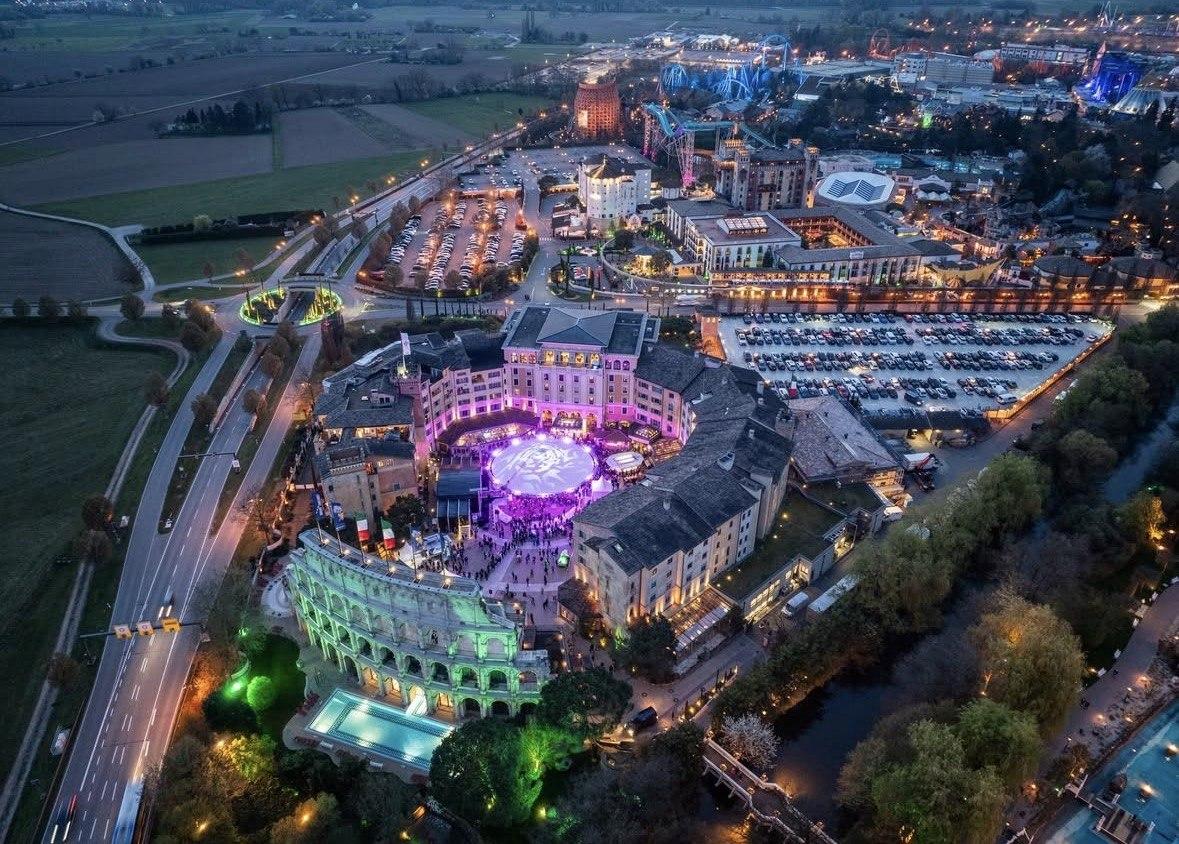
I spent a week in Baden-Württemberg this March — three nights in Offenburg, a day wandering Freiburg, and the rest at CloudFest, the internet infrastructure industry's big annual gathering, held right inside Europa-Park in Rust. It was one of those trips where the conference itself was only half the story.
A Detour to Freiburg
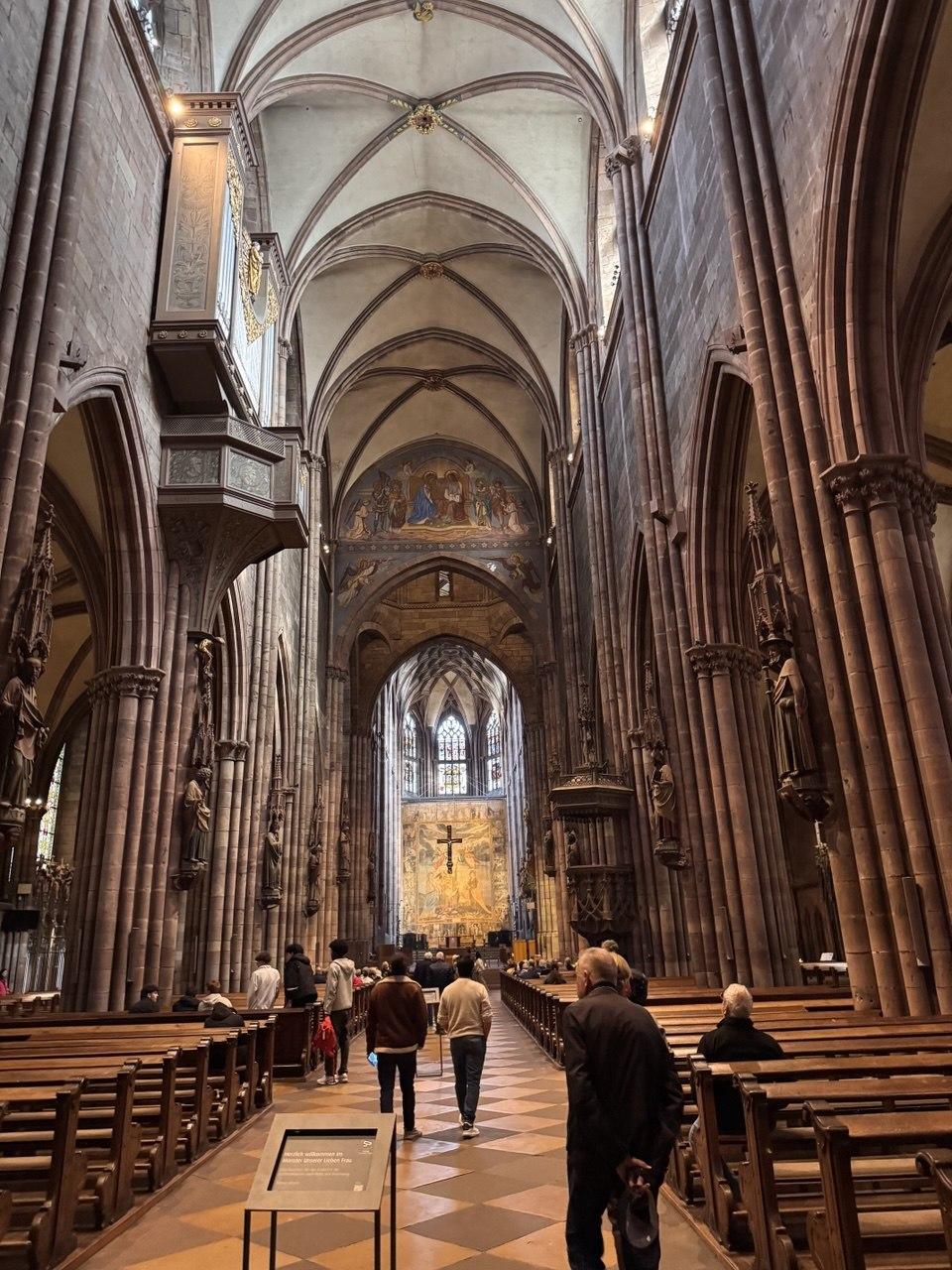
Before the conference started, I took a day to walk around Freiburg and stepped into the Freiburg Minster — the Münster Unserer Lieben Frau. Construction started around 1200 on the site of an older Romanesque church, and it took roughly four centuries to finish, with the style shifting from Romanesque to Gothic somewhere along the way. Its 116-metre tower and openwork stone spire were the first of their kind anywhere, and the art historian Jacob Burckhardt famously called it "the most beautiful tower on earth" back in 1869. What stayed with me most: it survived the bombing raids of November 1944 that flattened the buildings around it, apparently held together by lead anchors in the spire dating back to the Middle Ages. Standing inside, under those vaulted ceilings, it's easy to believe it.
Then, Into CloudFest
CloudFest bills itself as the world's number one internet infrastructure event, and after being there, I believe it — this edition pulled in more than 10,000 people from hosting, cloud, security, and web companies from all over the world, all packed into Europa-Park for a few days in March.
The World Server Throwing Championship
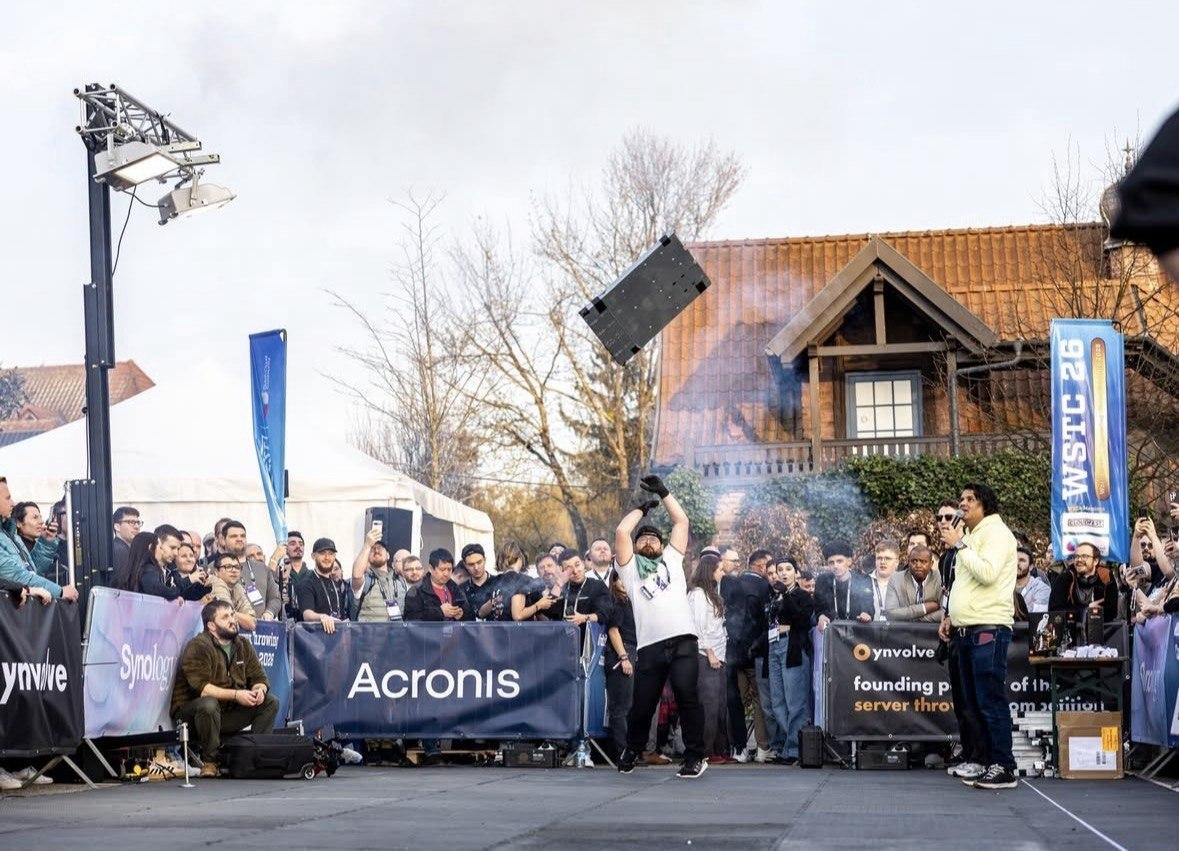
This was the moment that convinced me I was at a very particular kind of conference. The World Server Throwing Championship is exactly what it sounds like — people literally throwing old, decommissioned servers for distance and style. I later learned it started as an inside joke in data-center basements, organized quietly for over a decade by the Dutch Cloud Community, before CloudFest turned it into an open, official event with real brackets and a crowd. Watching a grown adult in safety gloves launch a server rack across a stage while a few hundred people cheered is not something I expected to see at a hosting conference, but I'm glad I did.
The Venue Itself
Europa-Park as a conference venue is genuinely surreal. The aerial photo at the top of this post shows it well — that green-lit building shaped like the Colosseum is Hotel Colosseo, one of the park's themed hotels, and the purple-lit plaza next to it was set up for one of the CloudFest evening events. Seeing the whole resort lit up from above, rides and all, it's easy to forget you're there for a B2B tech conference and not a holiday.
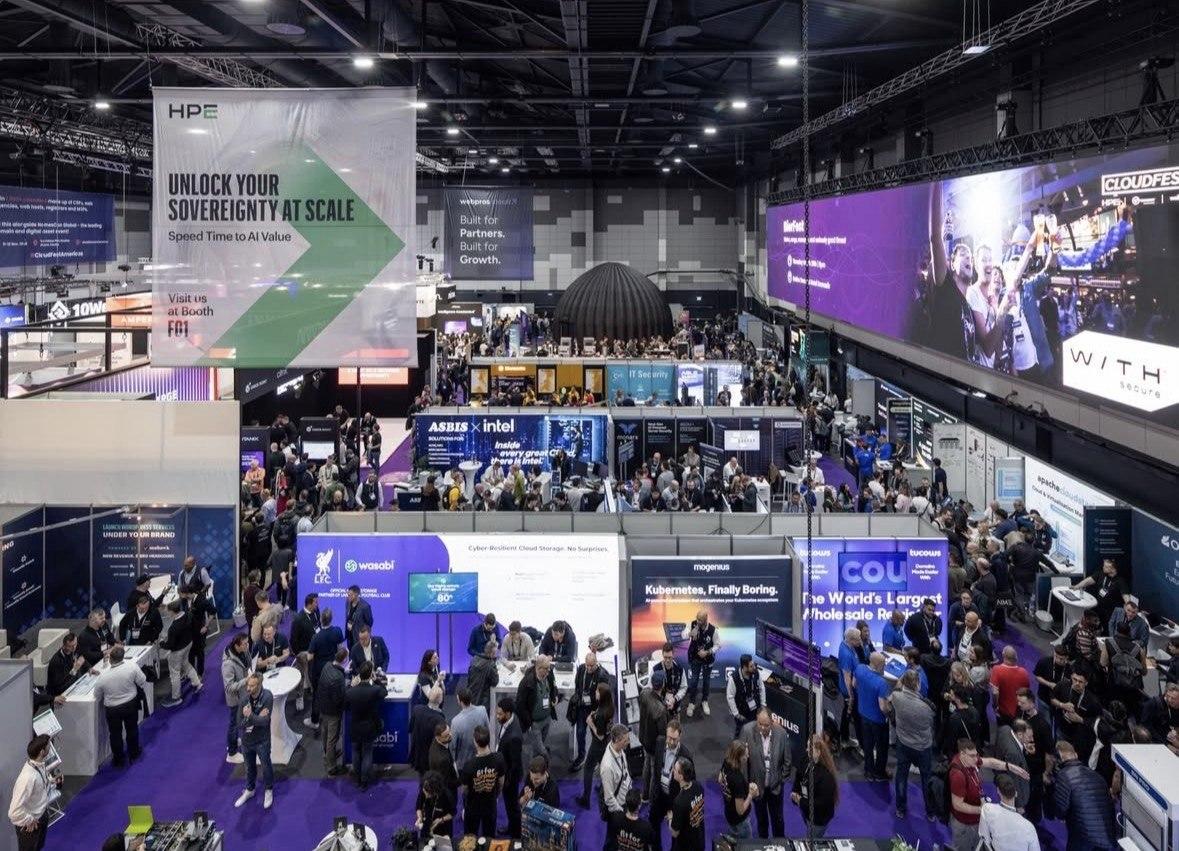
The exhibition floor alone took a full day to properly walk through — hosting providers, cloud infrastructure, cybersecurity, domain registrars, all in the same few halls, comparing notes and pitching each other in the hallways as much as to attendees.
AI, SEO, and the Future of Publishing
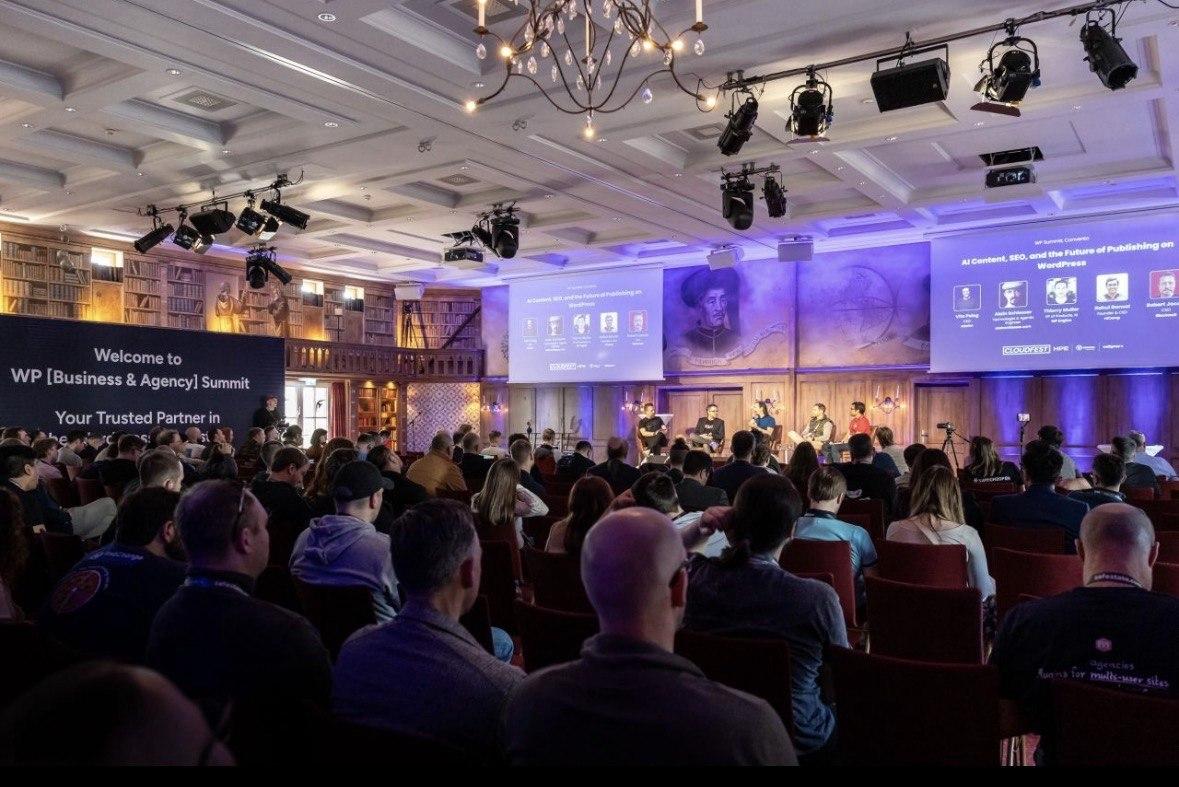
One of the sessions that stuck with me most was a panel of CEOs from different WordPress and hosting companies, talking about AI content, SEO, and where publishing on WordPress is heading. It was a good, honest conversation — no one on stage was pretending to have it all figured out.
A Quick Break
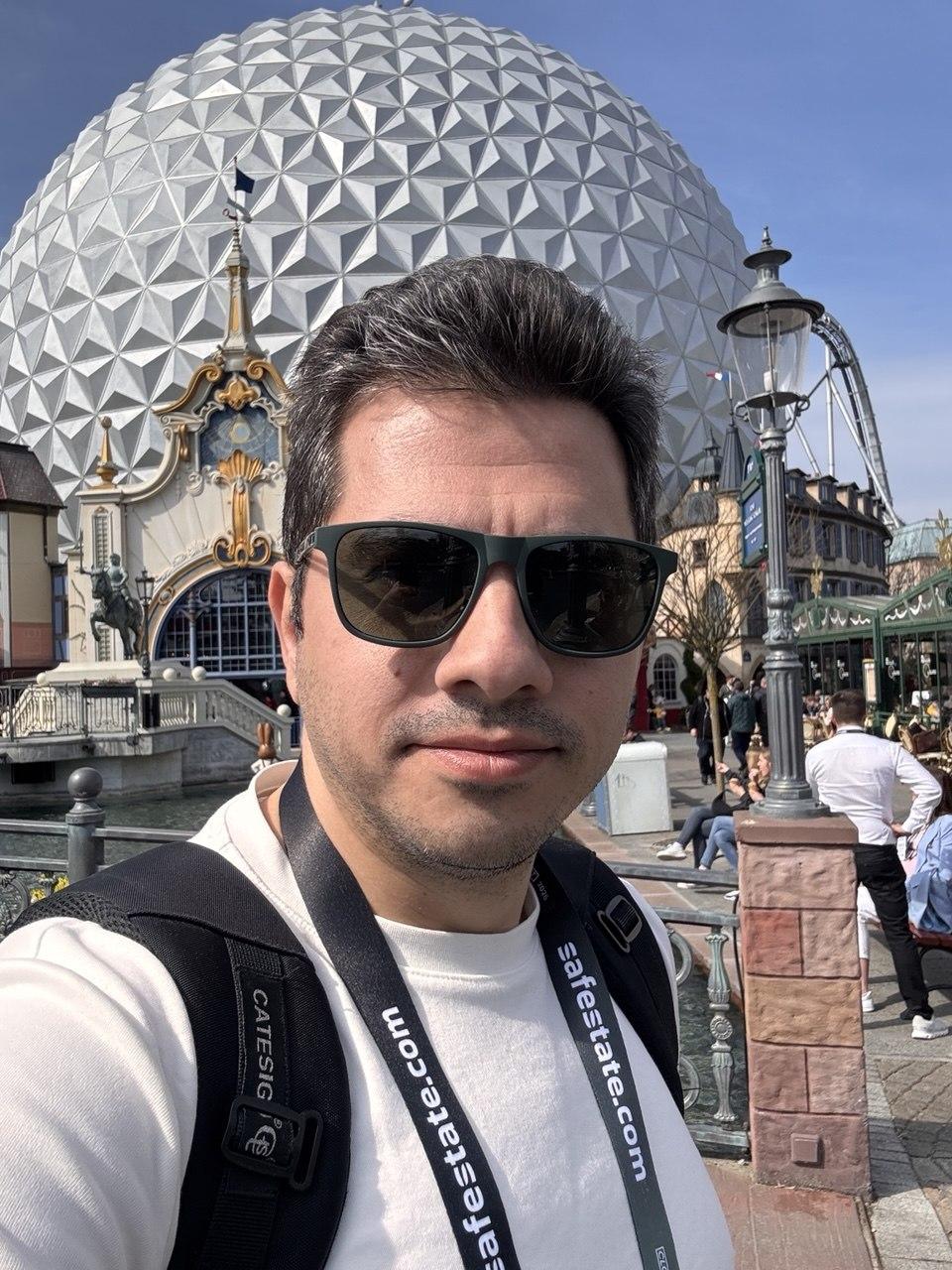
Between sessions I took a few minutes to actually look around. Europa-Park is enormous, and different corners of it are built to resemble different European countries — this dome sits near one of the park's more futuristic, pan-European sections.
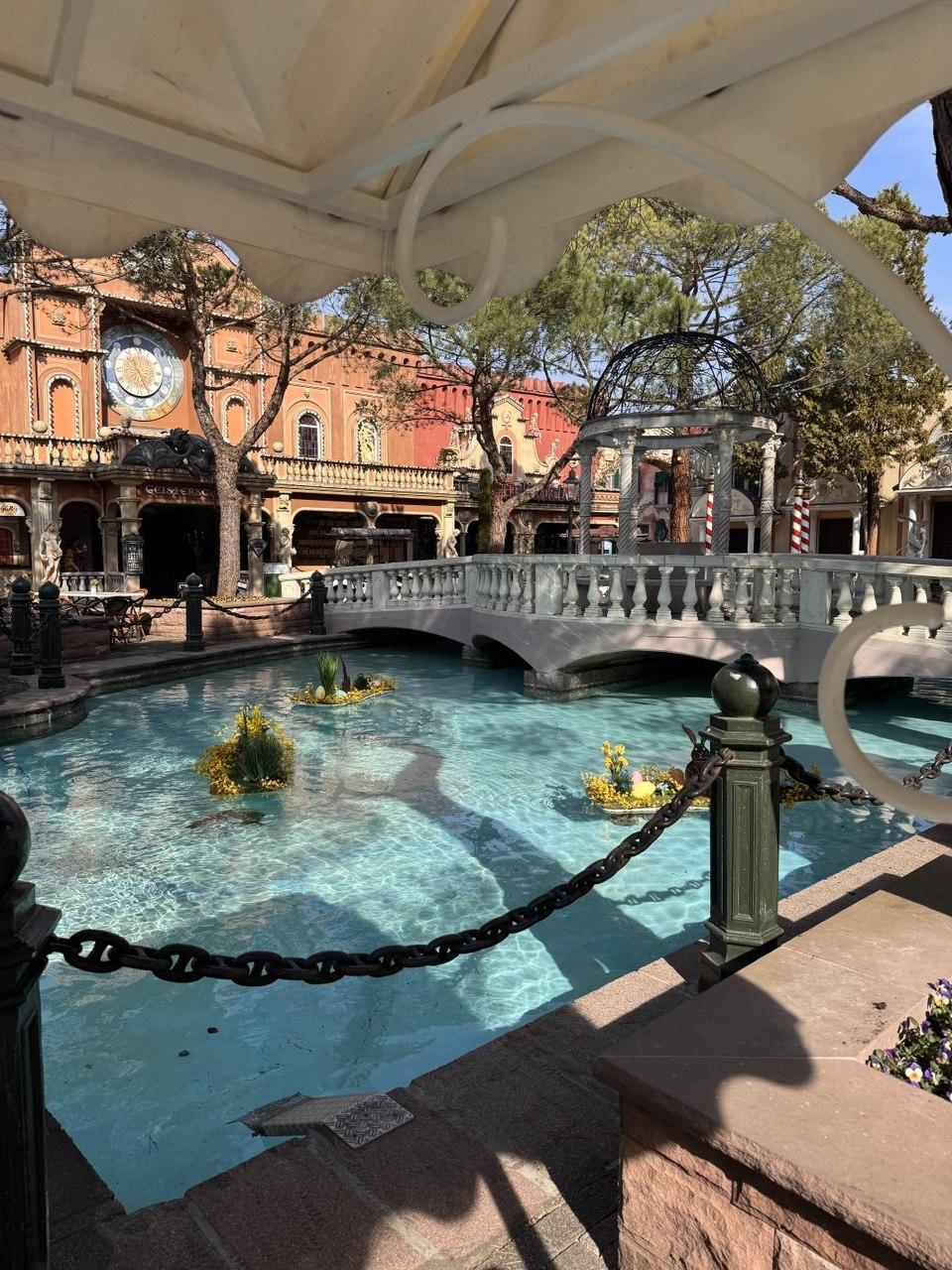
A few minutes' walk away, the park shifts completely — this canal and bridge could pass for a quiet corner of Venice. That's the whole idea behind Europa-Park: each themed area is built around the architecture and feel of a different European country, so a short walk takes you from Germany to Italy to Spain and beyond.
How People Actually Break In
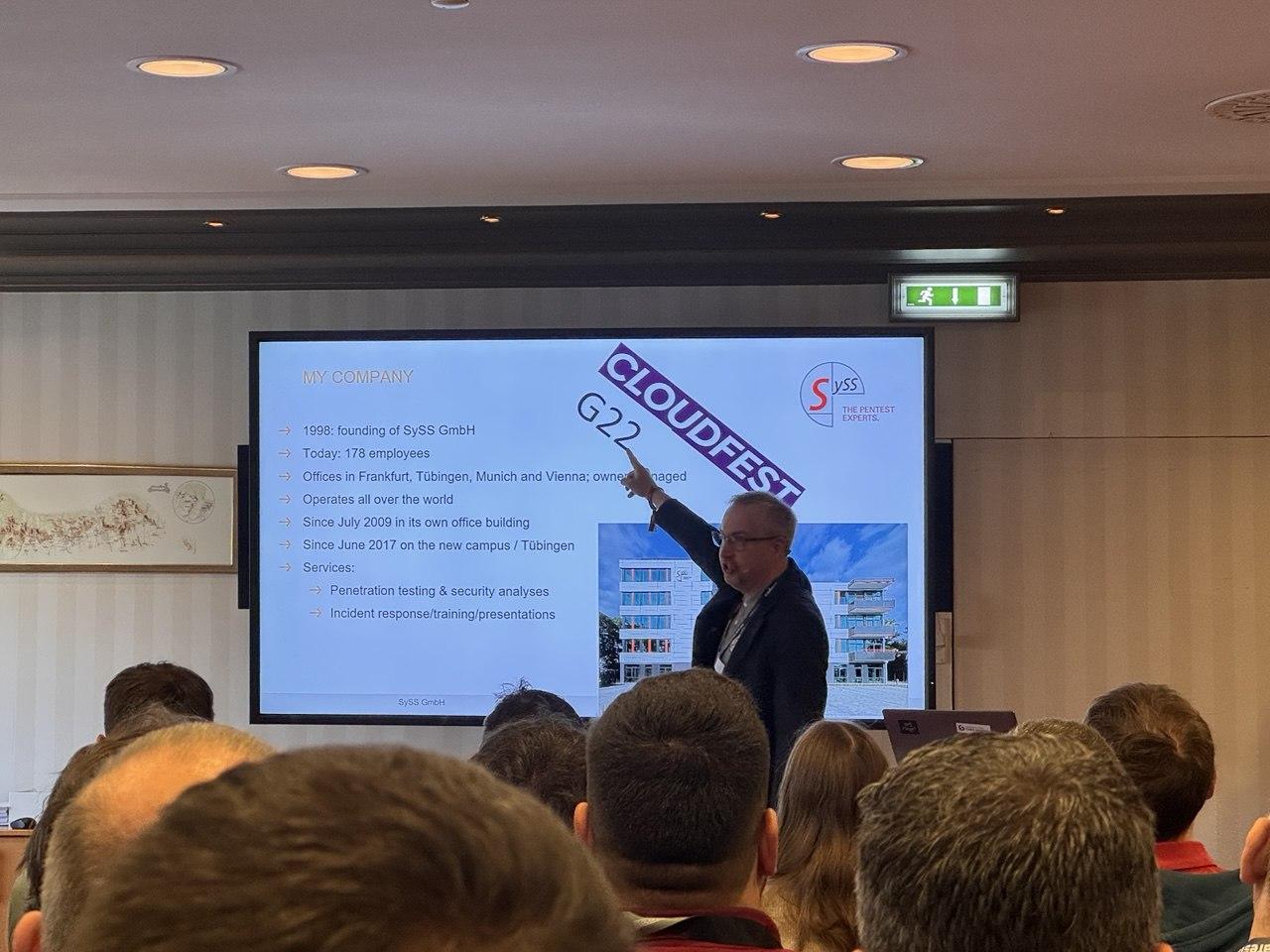
This talk was one of the more practical ones I sat in on. The speaker was from SySS GmbH, a German penetration-testing company that's been at it since 1998, and he walked through real social-engineering and pentest techniques — including sending a fake SMS that appeared to come from a completely different number. I'm still turning that one over in my head, honestly.
Design Patterns, WordPress Style
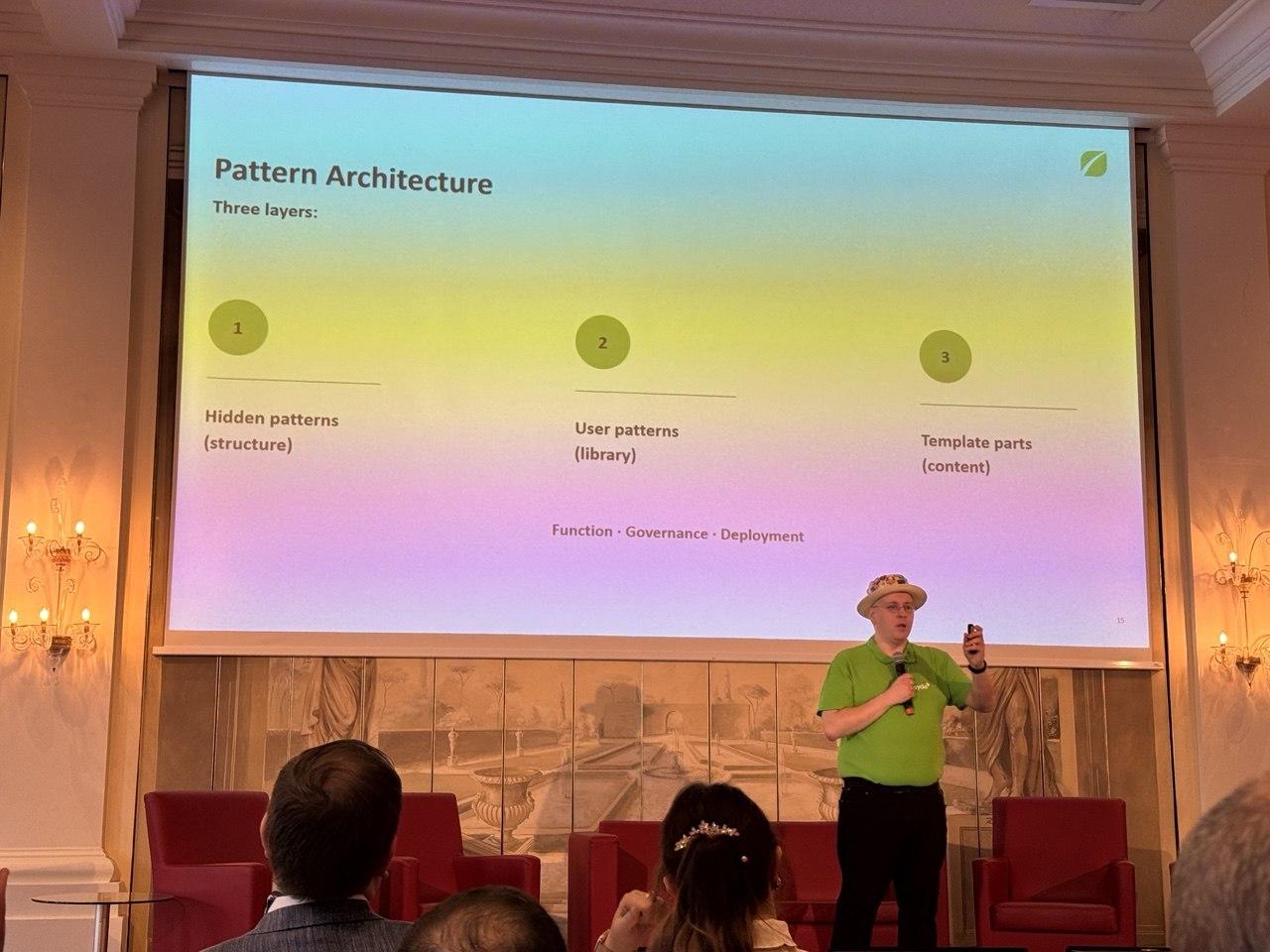
Most of the talks I went to were run by companies working somewhere in the WordPress ecosystem — templates, content tooling, SEO, AI add-ons — and this one broke down how they think about design patterns: hidden structural patterns, reusable user-facing patterns, and template parts, each with its own role in function, governance, and deployment.
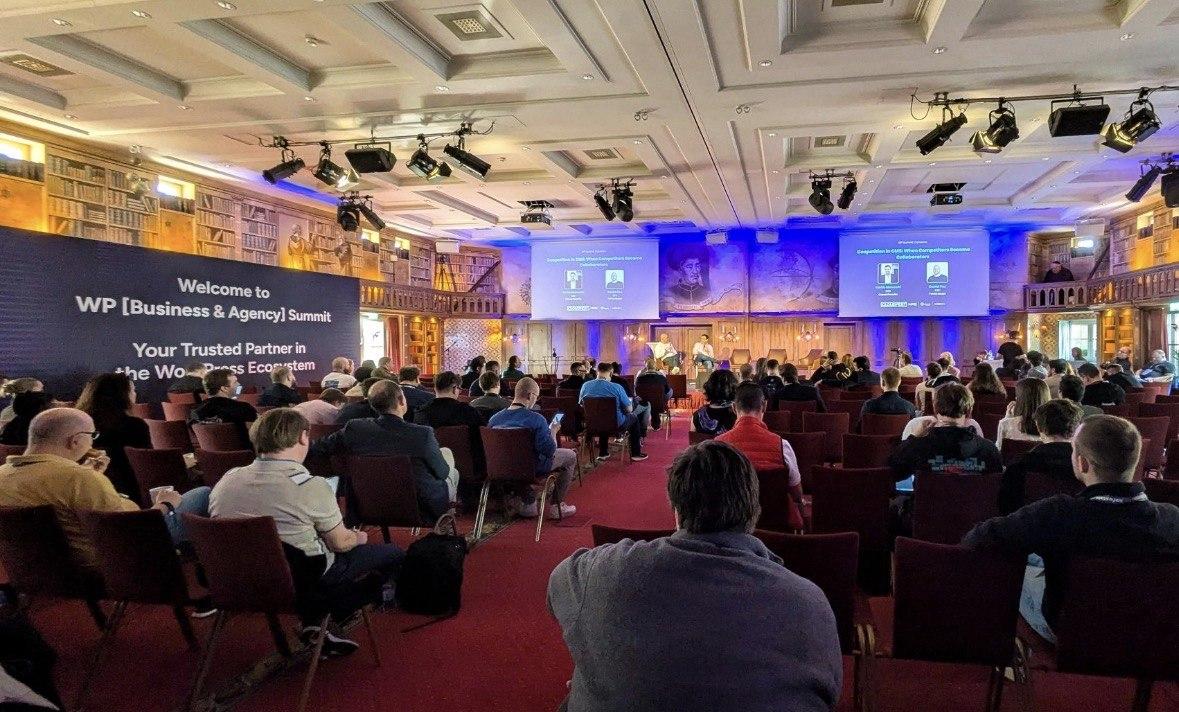
The WP [Business & Agency] Summit ran several of these side sessions across different halls throughout the event, and this one on "coopetition" — competitors collaborating where it makes sense — was a good example of how small the WordPress business world really is once you're inside a room like this.
The Care Plan Formula
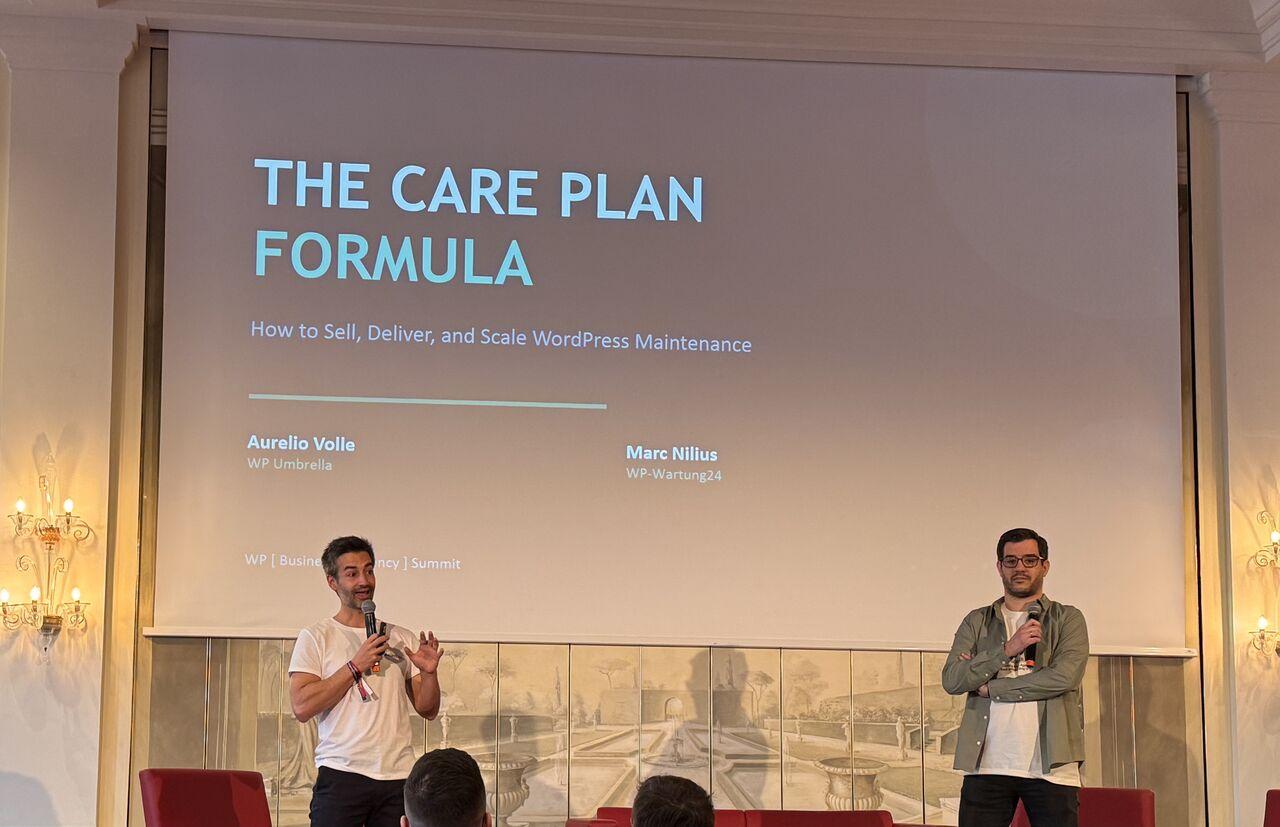
Another session that stuck with me was Aurelio Volle and Marc Nilius walking through what they call the Care Plan Formula — how to sell, deliver, and scale WordPress maintenance. It's easy to think of a care plan as just another line item, but their point was that reporting is really the heartbeat of it: if you're not showing a customer the updates, security work, and maintenance you're doing behind the scenes, they never see the "care" part, just an invoice. I left with some genuinely useful ideas about making that kind of reporting reflect the actual effort that goes into keeping a site fast, reliable, and secure — thanks to the teams at WP Umbrella and WP-Wartung24 for that.
Turning Vague Requests into Software
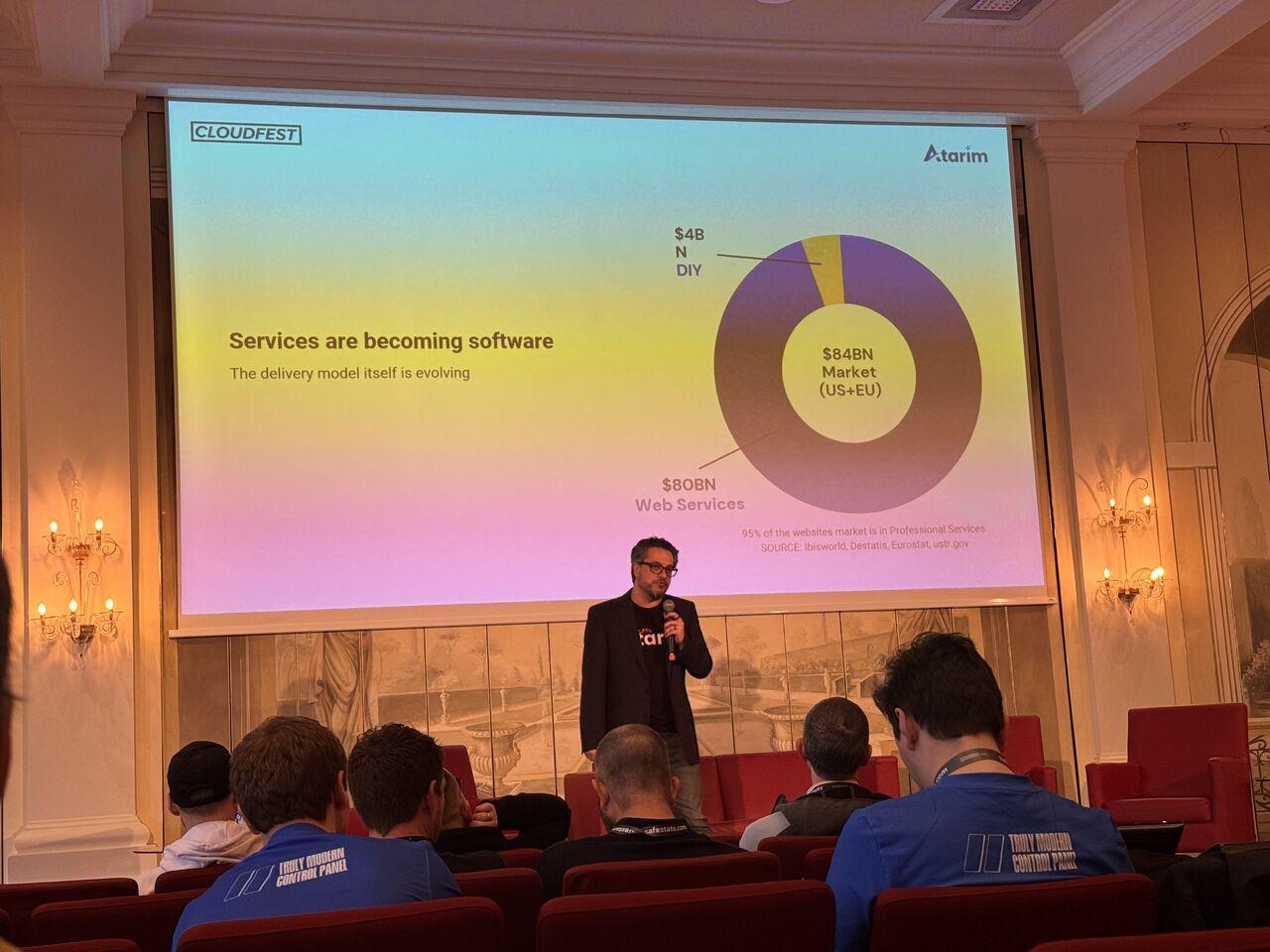
Vito Peleg's talk hit a nerve too. He put an actual number on something every agency feels — a 500 to 700 percent time inflation caused by stakeholder delays and unclear feedback. His argument was that AI's real value isn't just doing tasks faster, it's turning a vague customer request into a clear, actionable brief, so changes can happen in minutes instead of days rather than burning the team's time on endless clarification loops. "Services are becoming software," as he put it, and the delivery model is shifting to match. Thanks to Atarim for that one — it's stuck with me since.
Lunch, Inside a Castle
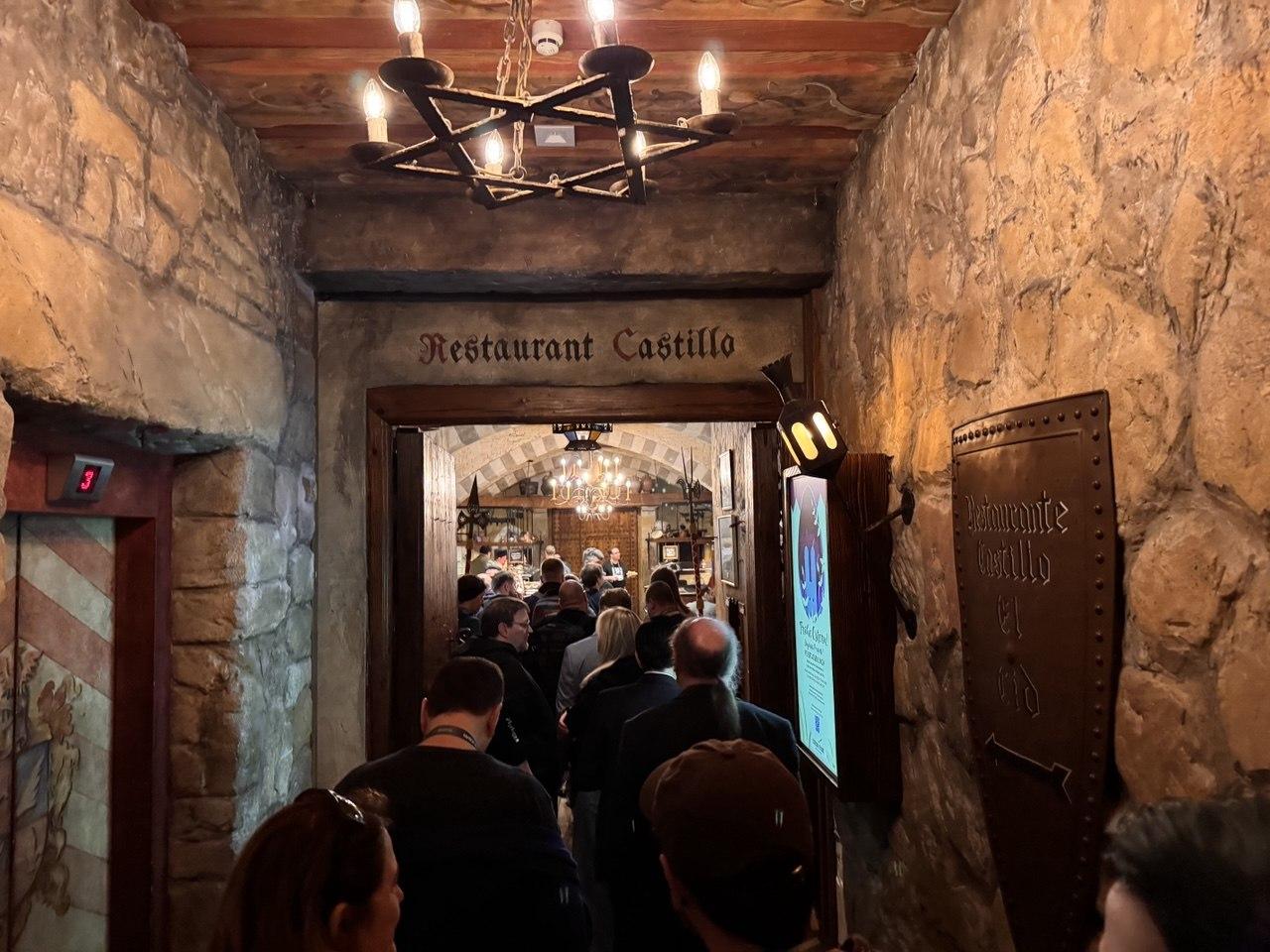
By the time lunch came around, we ended up at Restaurant Castillo, in the park's Spanish-themed area — stone walls, wrought iron, the whole atmosphere of an actual castle. The food was excellent, and after a morning of talks, sitting down with people I'd just met from a handful of different countries was probably my favorite part of the day.
What I Took Away
Staying in Offenburg for three nights and commuting in gave me a bit of distance to process each day, and I used one of those days to properly explore Freiburg on foot. Between the sessions, the hallway conversations, and dinners with people from backgrounds completely different from mine, I made real friends in just a few days — the kind of thing that's hard to plan for and easy to be grateful for.
On the technical side, my honest read is that AI still isn't deeply or professionally integrated into most of these companies' products yet. Some are using it for content generation, some for SEO, some to analyze customer requests faster, a few are experimenting with AI replacing basic assistant bots — but a lot of it still felt like early experimentation rather than a finished strategy. That said, I don't think that's a bad thing. Almost everyone I spoke with left with a long list of ideas they actually wanted to go build. Sometimes that's exactly what a conference like this is for.

Mohammed Ahmadi
Software Developer